F-15C Flight Theory
Fighting the F-15C well requires understanding what the aircraft is doing aerodynamically. The Eagle has high thrust and strong control authority, but lift, drag, AoA, and energy still define what is possible.
Airspeed
The pilot must distinguish between indicated airspeed and true airspeed.
- Indicated Airspeed (IAS) reflects dynamic pressure on the aircraft. Lift, drag, stall behavior, and structural limits are tied primarily to IAS.
- True Airspeed (TAS) is actual speed through the air mass. At altitude, TAS is higher than IAS for the same dynamic pressure.
- Groundspeed is TAS corrected for wind and is useful for navigation, not maneuver limits.
Use IAS for flying the aircraft and TAS/groundspeed for navigation and intercept geometry.
Lift, Drag, and AoA
Lift is produced by the wing as airflow meets it at an angle. Increasing angle of attack increases lift until airflow separates. After separation, lift falls and drag rises sharply.
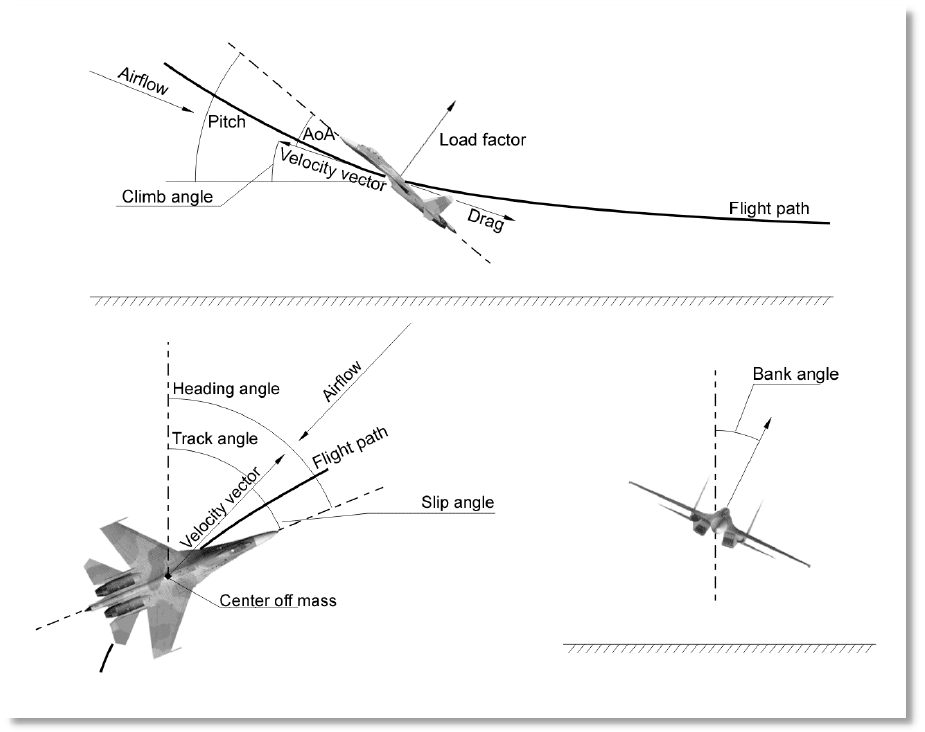
The HUD velocity vector shows where the aircraft is actually going. At high AoA the nose may point far above the velocity vector. Pulling harder in that condition may only add drag, not useful turn performance.
Turn Forces
In a level turn, the lift vector tilts. The vertical component supports weight; the horizontal component turns the aircraft.
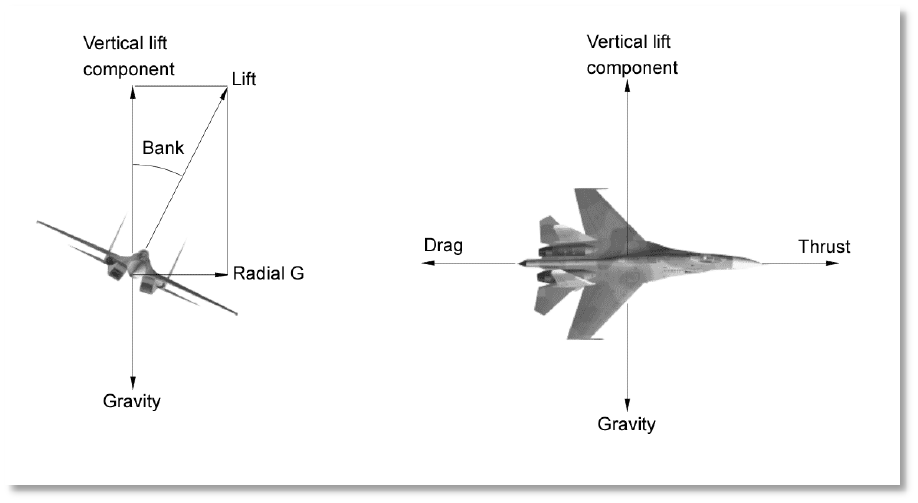
Higher G increases turn rate and reduces turn radius, but it also increases induced drag. That drag bleeds speed and can quickly turn an aggressive attack into a low-energy defensive problem.
Turn Rate and Turn Radius
The F-15C's best combat turn performance occurs near corner speed, where it can generate a high turn rate without immediately running out of lift or exceeding limits.
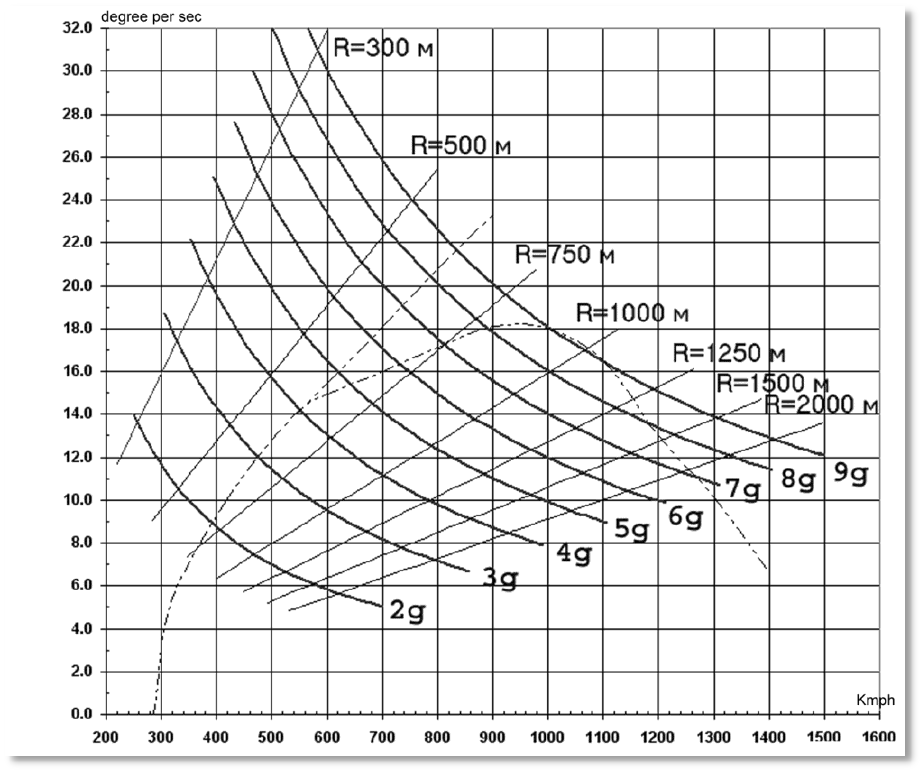
Important concepts:
- Turn rate: How fast the nose changes direction, measured in degrees per second.
- Turn radius: The size of the turn circle.
- Instantaneous turn: A high-G pull that gives rapid nose movement but loses energy.
- Sustained turn: A turn the aircraft can maintain without continued speed loss.
For practical F-15C handling, avoid holding maximum G after the initial nose placement unless the shot or survival depends on it.
Angle of Attack and Stall
AoA is the angle between the aircraft reference line and the oncoming airflow. As AoA increases, buffeting and drag increase. If AoA becomes excessive, airflow separation can produce departure, yaw, and spin.
Recovery priorities:
- Reduce throttles if asymmetric engine effects or compressor problems are suspected.
- Neutralize excessive roll input.
- Use rudder to stop yaw/rotation.
- Lower the nose to reduce AoA.
- Recover airspeed before pulling out.
At high AoA, roll control shifts away from aileron-dominated control and toward rudder coordination.
Energy Management
Aircraft energy has two main forms:
- Potential energy: Altitude.
- Kinetic energy: Airspeed.
The F-15C can trade altitude for speed and speed for altitude, but hard maneuvering converts energy into drag loss. The pilot must decide when to spend energy for nose position and when to preserve energy for follow-up maneuvering.
Good habits:
- Enter the fight with altitude or speed in reserve.
- Do not chase every turn with maximum aft stick.
- Use vertical maneuvers when you have excess energy.
- Rebuild speed after a hard turn before committing to another.
- Watch AoA and airspeed together, not separately.
Training Focus
Practice these drills:
- Level turns at fixed IAS and increasing G.
- Sustained turns while holding altitude.
- Instantaneous turns followed by energy recovery.
- High-AoA rudder roll control.
- Stall and departure recognition.
- Vertical repositioning without bleeding below safe recovery speed.