F-15C Combat Tactics
F-15C combat is a chain of decisions: find the target, identify it, build a firing solution, survive the enemy's shot, and preserve enough energy to continue. Radar operation, missile knowledge, visual lookout, and aircraft handling must work together.
Target Search
The first advantage is usually detection.
- Use altitude to improve radar coverage and reduce terrain masking.
- Adjust antenna elevation for the expected target altitude, not only range.
- Use AWACS/GCI calls to search in the right sector.
- Keep the radar silent when surprise matters and outside support is available.
- Watch TEWS for emitters that your radar is not currently scanning.
Large targets are easier to detect than small fighters. Low targets are harder to detect because the radar must work against ground clutter.
Beyond-Visual-Range Combat
BVR combat is not a straight-line missile race. A good shot is one you can support while reducing the enemy's ability to return fire.
Commit
Before launch, confirm identification, target range, aspect, altitude, and threat state. A high, fast, head-on AMRAAM shot has far more energy than a low, slow, tail-chase shot.
Support
After firing:
- Maintain radar support until the missile is active if tactics allow.
- Crank left or right to keep the target near radar gimbal limits while reducing closure.
- Watch for enemy launch indications.
- Be ready to notch, descend, or break if the enemy missile becomes the priority.
Defend
If the enemy shot is more dangerous than your own, survival comes first. Defend, preserve the aircraft, and recommit when the threat is defeated or timed out.
Visual-Range Combat
Inside visual range, radar and missiles still matter, but sight picture and energy state become decisive.
High Yo-Yo
Use a high yo-yo when you are closing too quickly on a turning target. Climb out of plane to reduce closure, then roll back down to regain nose position.
Scissors
Scissors develop after overshoots. The goal is to force the opponent out in front while keeping enough airspeed for control authority. The aircraft that can control closure and nose position wins.
Energy Discipline
The F-15C is powerful, but it is still vulnerable when slow. Avoid flat, maximum-G turns that empty the energy state unless they immediately create a shot or prevent being shot.
Gun Employment
Gun employment requires lead, range control, and a stable firing window.
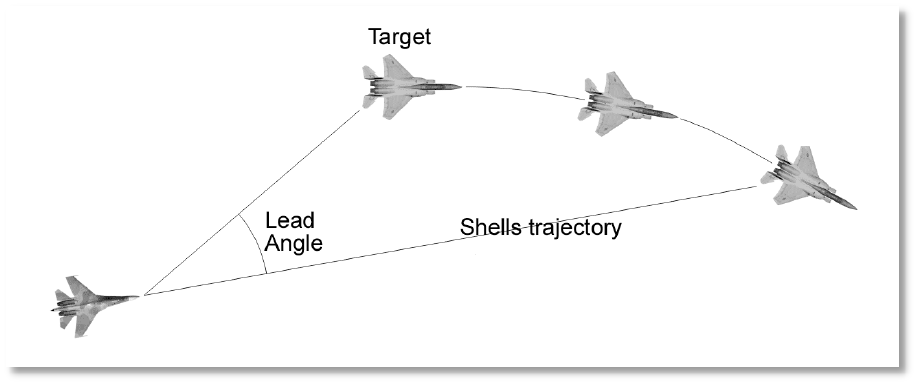
Practical rules:
- Use radar-assisted gun modes when possible.
- Fire short bursts.
- Pull lead before firing; do not wait until the target crosses the fixed nose line.
- Avoid chasing with high AoA if it destroys closure control.
- If using a funnel sight, match the target wingspan to the funnel and fire when the target is stable inside it.
Missile Tactics
Missile launch zones are dynamic. Ranges shown by the fire control system assume target behavior and energy conditions. A maneuvering target can defeat a missile that was technically inside maximum range.
Use:
- AIM-120 for BVR pressure and multi-target engagements.
- AIM-7 when radar illumination can be maintained and AMRAAMs are unavailable or tactically unsuitable.
- AIM-9 for visual-range, high-confidence heat shots.
Do not fire every missile at maximum range. Close enough to force the target defensive, but stay far enough to survive the merge or return shot.
Missile Evasion
Missile defense combines geometry, altitude, energy, and countermeasures.
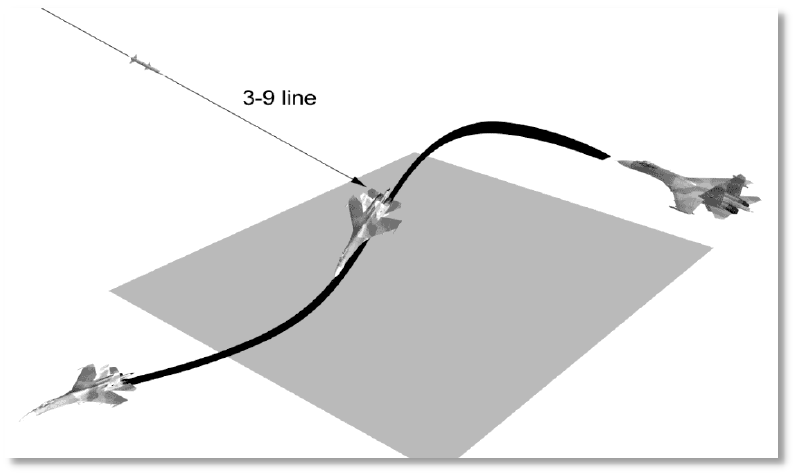
Against radar-guided missiles:
- Turn perpendicular to the threat to beam or notch the guiding radar.
- Descend if terrain and altitude allow, forcing a look-down tracking problem.
- Dispense chaff while maneuvering.
- Time the final break so the missile must pull maximum lead when it has already lost energy.
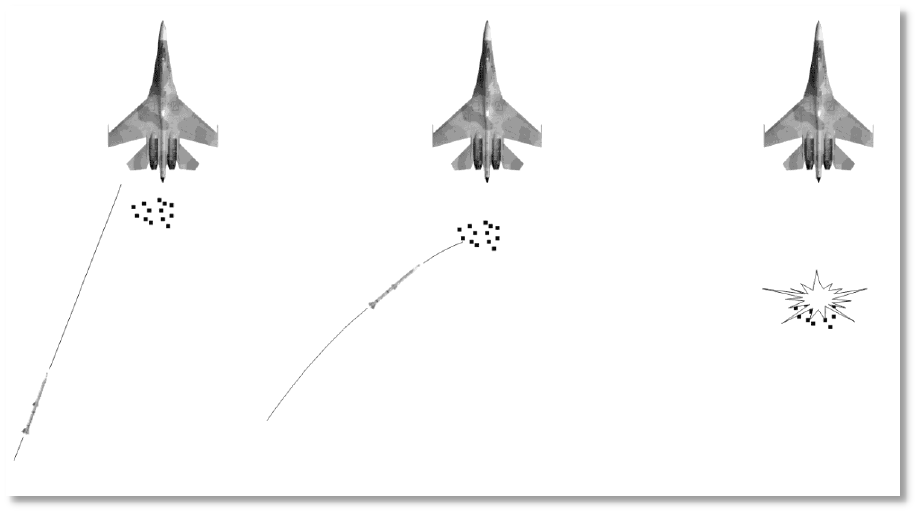
Against infrared missiles:
- Visually acquire the threat if possible.
- Change aspect and reduce heat presentation.
- Dispense flares in a burst pattern.
- Break hard at the terminal phase.
Tactical Priorities
- Do not lose sight of the nearest threat.
- Do not ignore TEWS missile indications.
- Do not support a low-probability shot into a high-probability enemy missile.
- Keep enough speed to maneuver after the first shot.
- Rebuild situational awareness after every defensive turn.